[Review] Oak Origins: From Acorns to Species and the Tree of Life
"This is a book that should be of interest to a wide range of readers, and especially for the budding naturalist," our reviewers write.
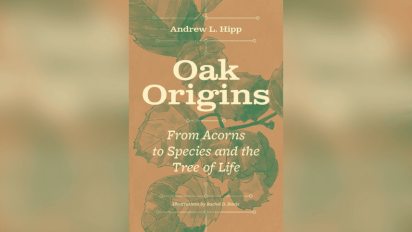
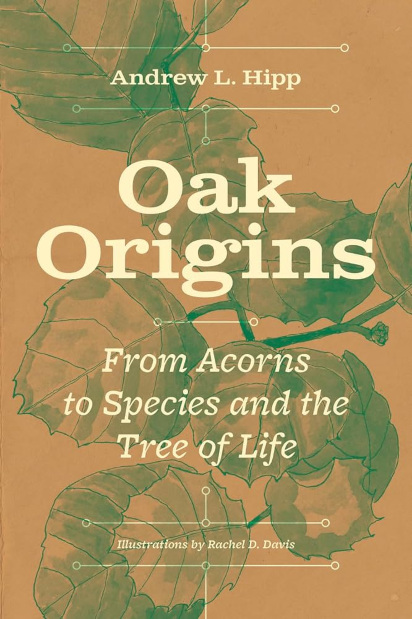
In his book Oak Origins, Andrew Hipp, Director of and Senior Scientist at the Morton Arboretum near Chicago, uses the familiar trees to illustrate a broad range of topics across the fields of ecology and evolutionary biology. Hipp provides clear, lively, and entertaining discussions that draw on a diverse set of disciplines while maintaining a level of accuracy that would satisfy most experts in each field. Gorgeous hand-drawn illustrations further enliven the book.
 The first chapter addresses the reproductive season of oaks, with discussions of flowering, pollination, and acorn development. Hipp provides detailed descriptions of the reproductive process while keeping the discussion light with personal anecdotes. He describes the processes of pollination and embryo and acorn development, and discusses the variety of birds, mammals, and insects that rely on acorns as important sources of food.
In the second chapter, Hipp delves into the diversity of oak species. He uses the diversification of oaks (and other species) to illustrate many of the principles proposed by Charles Darwin. He also provides engaging stories of the action of natural selection on oak seedlings and adults, showing how that process contributes to improved survival of future generations. Throughout, he incorporates the themes of genetic diversification of species and the ability of individual trees to “plastically” respond to changing environmental conditions through their lifespan.
Hipp begins the third chapter with personal reminiscences about individual trees and species before turning to a history of work on the tendency for oaks to interbreed. Hipp uses examples of oak hybridization to illustrate the nuances of the various definitions of the concept of species. He manages to condense the extensive literature on hybridization — from early studies of morphology to genomic analyses — into a very readable and insightful discussion.
In the fourth chapter, Hipp launches his discussion of the evolutionary history of oaks — starting with “an unassuming population of flowering trees” in the mid-Cretaceous — by describing mythological and religious versions of the “Tree of Life.” He uses this metaphor to pivot to Darwin’s tree-like depiction of the evolutionary history of species and ultimately to DNA-based phylogenies that provide hierarchical groupings of species with estimates of their relatedness.
The discussion of the evolutionary history of oaks continues in the fifth chapter, starting from the end of the Paleocene 56 million years ago. This chapter largely focuses on the origins of the major groups of oaks and how their distributions were affected by changing landscapes due to continental drift and the rise and fall of ocean levels along with dramatic changes in global temperatures over geological time.
In the sixth chapter, Hipp uses the analogy of splicing short recordings of music to create a coherent song to explain how the shuffling of genes during reproduction can produce variety among offspring. He follows this theme through the chapter and expands it to include gene swapping by interbreeding — hybridization — between species.
Hipp’s seventh chapter is focused on how different species of oaks come to coexist in the same community. He explains how oak communities often consist of distantly related species that have become adapted to the same habitat. The second half of the chapter addresses a different explanation of coexistence — the idea that unrelated species wouldn’t be subject to attack by the same pathogens and herbivores. He ends the chapter with discussions of the many insect species associated with oaks and the resulting wide diversity of oak galls they use for their reproduction.
In the last chapter, Hipp discusses the future of oaks. He points out that only a small fraction of species that ever inhabited our planet are still alive today, so it’s unlikely for any individual species to persist forever. But it is also a process of extinction and rebirth as one species may branch to form several new ones.
This is a book that should be of interest to a wide range of readers, and especially for the budding naturalist: as an undergraduate student in biology with a focus on plant sciences, I (Mele) found this book to be a wonderful introduction to the mighty oak. Those looking for a lighter discussion will enjoy the many stories and personal references, but may be less interested in the technical aspects and the sometimes tedious litanies of the many types of oaks and individual species. For those who are hungry for more detail and in-depth discussion, Hipp provides a section of extensive notes and citations to the primary literature.
Overall, Hipp presents an enjoyable mix of stories interwoven with descriptions of the biology, ecology, and evolution of oaks, leaving the oak-curious reader with a greater understanding and appreciation of the diverse and lasting history of oaks.
Oak Origins: From Acorns to Species and the Tree of Life
by Andrew L. Hipp
University of Chicago Press

Anna Mele studied biology at Portland State University and is now a graduate student in biology at the University of California, Santa Barbara.

Mitchell B. Cruzan is Professor of Biology at Portland State University and the author of Evolutionary Biology: A Plant Perspective (2018). .