Fighting for climate data you can trust
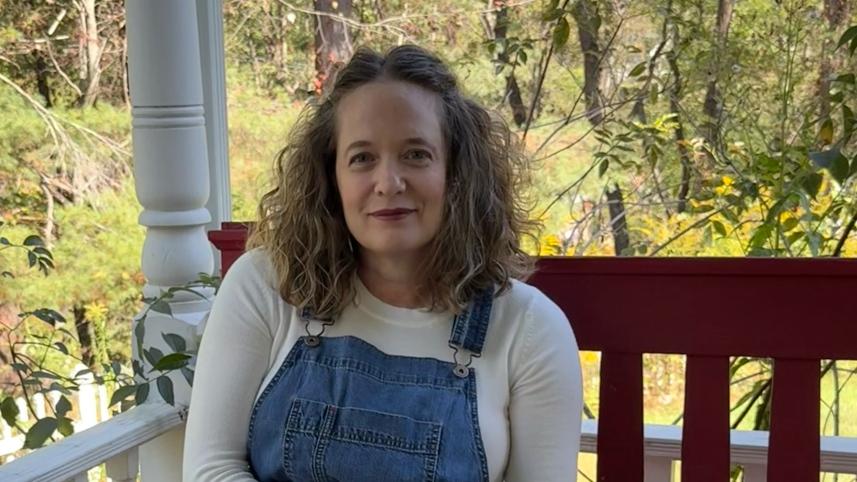
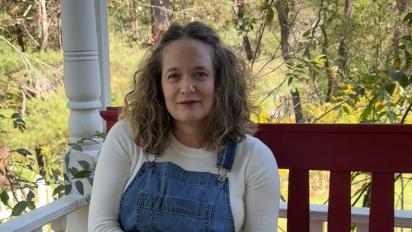
Rebecca Lindsey.
March 2026 proved to be the hottest on record in the United States. In fact, six of the nation’s 10 hottest months have occurred in the last decade. Despite this trend and clear scientific evidence of human-caused climate change, the federal government over the past year chose to shutter organizations and services that help interpret and make accessible critical climate data to educate the public, including science teachers and their students.
One such space, Climate.gov, represented the National Oceanic and Atmospheric Administration’s 15-year investment to build climate science literacy. It was a portal of climate information, available to scientists, teachers, policymakers, and anyone else interested in accessing the latest data, displayed in a visually rich, easily understandable format. And there was a lot of interest. With more than a million visitors each month, Climate.gov had become a trusted source of climate information.
Now, however, a click on Climate.gov redirects to NOAA.gov/climate, with no trace of the formerly popular resource site (though it’s possible, for now, if you have direct links, to access some of its individual pages).
“It’s like the federal government renovated a building and remodeled the front door to enter into a closet,” says Rebecca Lindsey, former website manager of Climate.gov.
Among the resources at Climate.gov that were affected was the Climate Literacy and Energy Awareness Network (CLEAN), of which NCSE was a contributing member. CLEAN, a network of educators and a set of lessons and activities, sat under Climate.gov’s “Teaching Climate” section. Lessons under the CLEAN mantle were vetted by scientists and science education specialists which assured their quality and accuracy. NCSE’s initial climate lesson sets, for instance, received a CLEAN seal of approval. This imprimatur assures teachers of quality amongst the sea of content available to them on the web. However, the disappearance of federal funding also meant the disappearance of the CLEAN network coordinator and the vetting process for new material.
“Unfortunately, there is a lot of misinformation about climate change online,” explains NCSE Science Education Specialist Britt Miller. “The increased use of artificial intelligence is exacerbating the problem. And so the need for trusted, vetted, resources from organizations like CLEAN is huge.”
Recognizing that these kinds of critical resources not only need to be preserved, but also kept open to the public, individuals, academic institutions, and non-profits have stepped in to ensure Climate.gov and climate datasets continue. The non-profit Climate Central now maintains U.S. Billion-Dollar Weather and Climate Disasters and its decades of data, which had been removed from NOAA’s website. CLEAN, which has always been led by the science education expertise of the Cooperative Institute for Research in Environmental Science (CIRES) at the University of Colorado Boulder and the Science Education Resource Center (SERC) at Carleton College, continues to make itself available despite the shutoff of federal funding. And Lindsey and former Climate.gov colleagues have created a new site, Climate.us, that will in many respects mirror the old one.
“Almost from the time we knew we were going to be fired, we began to talk about the alternatives, about what we could do,” Lindsey, who is director and managing editor for Climate.us, says. “We saw that the Trump administration was committed to spreading climate misinformation. It took down national climate assessments. The Department of Energy rolled out a report saying CO2 is not as bad as people think. Those were the sorts of things that galvanized us to try.”
Of course, there have been many challenges in getting Climate.us off the ground. Lindsey and her colleagues needed to develop a business plan, which was not something any of them had experience doing. They also needed funds for web hosting and development costs, as well as salaries. They succeeded on both counts: Lindsey continues to share her business plan with potential funders and she and her team have been able to raise an initial $250,000 through crowd-funding to publish the initial iteration of the site. Since then, a group of foundations have pledged to provide operating costs for the site for one year. Lindsey, for her efforts, was named a Time Magazine Time100 climate leader of 2025. She and all those who have worked to save critical resources and climate datasets from going permanently dark are making it possible for all of us to continue to live in the light of scientific accuracy and knowledge.
Lindsey is under no illusions, though. She recognizes that the private sector will have a hard time filling this gap over the long term.
“I’ve always believed, and I still believe, the best reason to have government is to pay for things that benefit everyone but don’t profit anyone individually,” Lindsey says. “Education is one of those things. Basic science is one of those things. So I think it’s imperative that the government support education and basic science. It’s not possible for the non-profit world and philanthropy to replicate the federal government.
“I feel that what we’re doing with Climate.us is basically triage and a bit of treading water so that there’s at least a light in the darkness,” Lindsey adds. “But also so that the important content of Climate.gov and the knowledge of its team and experience and lessons that were learned in building it — that investment — is not lost if and when the government comes back to its senses and realizes that it’s critical to build public literacy based on scientific information. I’m proud of what we’re doing but I’m under no illusions that we can fully replace what the government was funding.”
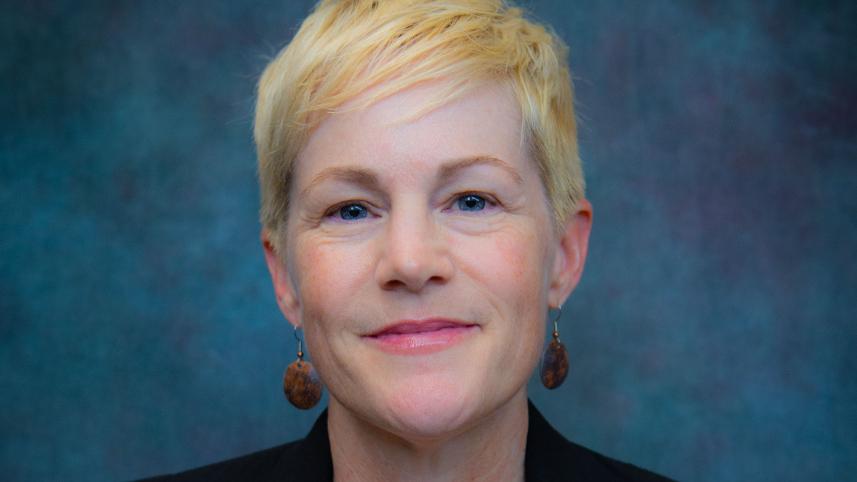
Carrie MacDougall.
Carrie McDougall, acting director of the Center for Education, Engagement and Evaluation, part of the Cooperative Institute for Research in Environmental Sciences at the University of Colorado, Boulder, which oversees the work of the CLEAN network, offers a similar assessment. Without federal funding, which supported website hosting and a position to lead the effort, CLEAN is now simply a repository. Whereas in the past, it was a true network that connected organizations and teachers across the country that worked to discover, vet, and add additional resources to the database.
“Inevitably, the use of CLEAN will go down, even though the resources are available,” McDougall says. In addition, should problems arise with the website, there are no funds for fixes, threatening the entire collection.
“I think these are Band-Aids on a dam that’s cracking,” McDougall says of the various efforts to step into the void left by the withdrawal of federal funds for CLEAN, Climate.gov, and others.
Lindsey sees the continuation of CLEAN and Climate.gov as an issue of equity.
“I don’t live in a wealthy area — I live in a rural, socioeconomically depressed part of West Virginia,” she explains. “So I know what the resources are like for teachers in our county. I know that they do not have either the capacity or the funds to teach about climate in their classroom. So having a resource like Climate.gov, and now Climate.us, where they can be sure they can trust the content, that the content is guided by science and scientists, that kind of thing is even more important in disadvantaged areas than wealthier places.”
NCSE Science Education Specialist Wendy Johnson worries that the defunding of federal climate initiatives can lead to doubts and uncertainty for teachers. “Classrooms are just microcosms of society,” she says. “So if there’s chaos and confusion about whether we can trust government websites, that trickles down into classrooms.”
In the meantime, Lindsey continues to fight the good fight. Climate.us’s crowdfunding campaign remains open. Lindsey continues to talk with potential funders to keep the lights on. And she continues to solicit scientist volunteers to join a panel to lend authoritativeness to the site, which no longer has the .gov domain to rely on for that.
But if she’s ultimately unsuccessful, she still feels it will all have been worth it.
“We’ll know that we at least created a copy of Climate.gov for all to use that’s outside the control of the federal government,” Lindsey says.